Gendi Primary School is growing its own future 🌴
At Gendi Primary School, the market garden is becoming much more than a place to grow food. It is helping the school feed its pupils, generate income and involve children directly in caring for a resource that belongs to their community.
The garden now includes an impressive 340 banana plants (60 of them planted in January 2026) alongside 52 papaya trees, 10 avocado trees and 24 moringa trees, as well as vegetables grown for school lunches.
And the children are part of the story. Pupils help care for the garden on a daily basis, from adding mulch and manure in the holes around the plants to watering them. It is a practical lesson in how food is grown and how land can become a sustainable resource.
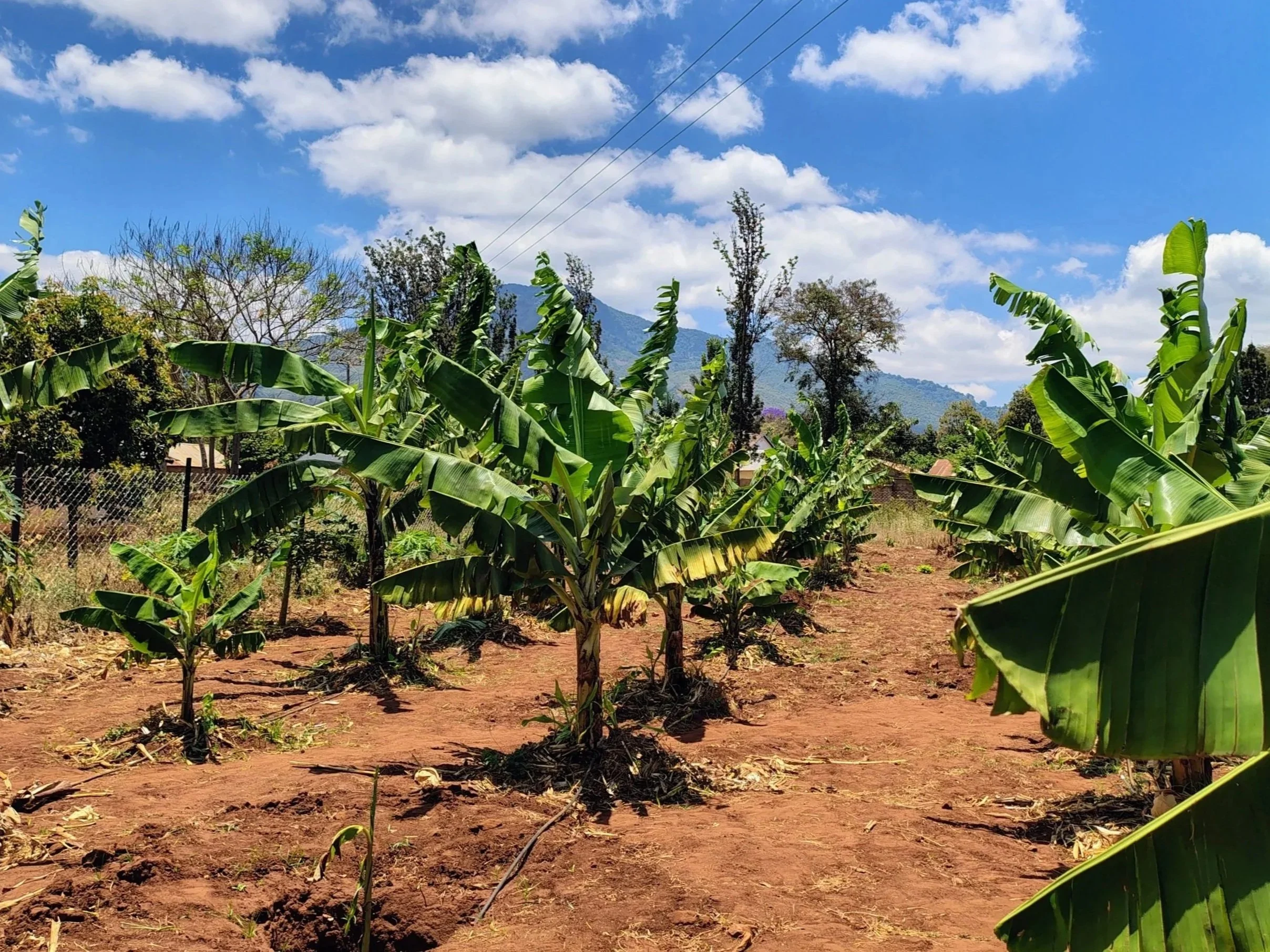
Changing weather conditions have brought challenges. Around 400 banana plants had been expected to produce at the same time, but 279 reached production, with the others taking longer to mature.
Even so, the results have been remarkable. With bunches selling for between TZS 10,000 and 22,000 depending on the variety, the school has generated around TZS 8 million from its bananas. The income is being put back into the school, helping with maintenance, stationery and payments to those working on the farm.
The garden also provides food directly. Fruit and vegetables go into pupils’ meals, while surplus produce can be sold to generate further income.
During the rainy season, the school also planted beans. Despite pest problems, the harvest reached around 250 kg. Some beans were kept for future planting, while the remainder could support school meals, including provision around the Standard 7 examination period.
Today, the school provides food for around 90% of its 741 pupils, with families providing meals for the remainder.
And there was another figure we were delighted to hear during our visit: last year, Gendi achieved a 100% pass rate for Standard 4 pupils.