New Hope in ChemChem

The long neglected community of ChemChem, in the rural areas of Babati Town has felt neglected for a long time with poor investments and no visitors from anywhere. The community is made up of Gorowan people and Maasai people and the clash between agriculturalists and pastoralists has had an undercurrent of conflict.
In 2024 Mikuyu Tanzania, with permission, undertook a community survey to identify the factors contributing to the poor academic performance of their primary school. The report conclusions, which were confirmed by the community and the Babati Council, were that the poor performance was a result of:
poor learning environment with hazardous and uninspiring classrooms with no resources.
poor teaching environment with few teachers, no female teachers, and one, derelict teachers house causing teachers to a) not want to be there, b) having long, expensive and hazardous commutes, and c) not having good relations with the community.
water insecurity leading to children taking time when they ought to be learning to collect water from a far off source.
Poor student motivation caused by disinterested parents and 30km round trip to walk a secondary school for those who pass their exams - daily.
Parental poverty caused by food and income insecurity due to poor farming techniques in relation to their environment.
Working with the school development committee, the village committee, the village elders and Babati Town Council, Mikuyu Tanzania, together with our local NGO partners Impact Lead Tanzania (ILT) coproduced a plan to change things around. This plan is now up and running.
Action to date:
We improved water security at the school by adding 45,000 litres of water storage. 20,000 to be fed from rainwater and 5,000 connected to the local, erratic mains supply from Bawasa.
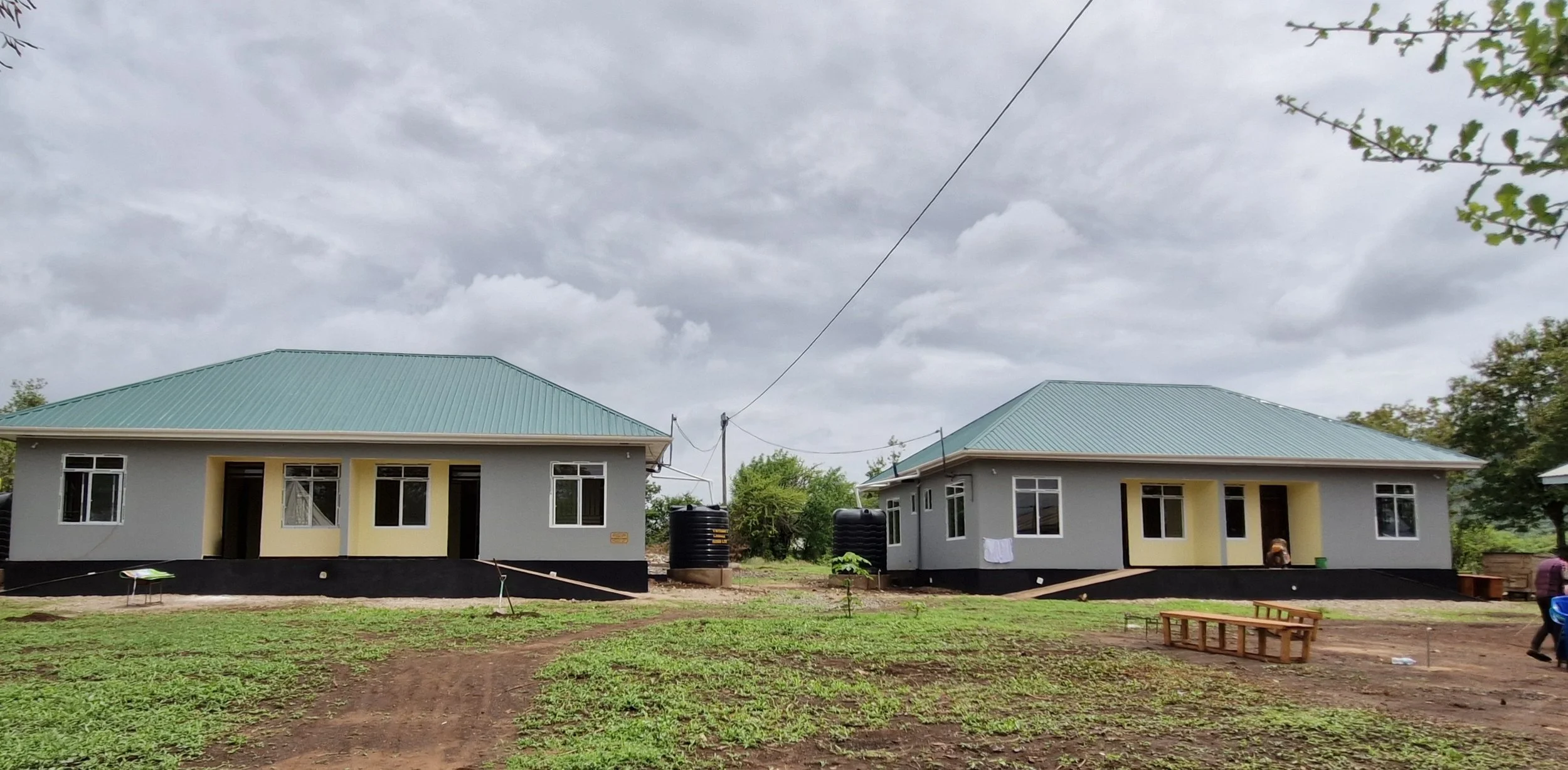
We built 4 teacher’s houses which enabled the Town Education Department to allocate 3 new female teachers to the teaching staff. The homes each have 2 bedrooms, 2 bathrooms, kitchen, store and living room, 5,000 of rainwater storage and 1,000 litres of mains water storage, and is connected to the electricity grid, run by Tanesco. The electricity connection was made by the Manyara Regional Commissioner, who after hearing of the building, decided to pop in and see what was going on. Shocked at the state of the school, she ordered Tanesco to connect the school, the teachers house and surrounding homes to the grid and pledged to repair the derelict teachers house.
A maintenance agreement has been made where by the teachers are required to make good minor repairs as and when needed, while the community will maintain the physical structure and paint the houses every 2 years.
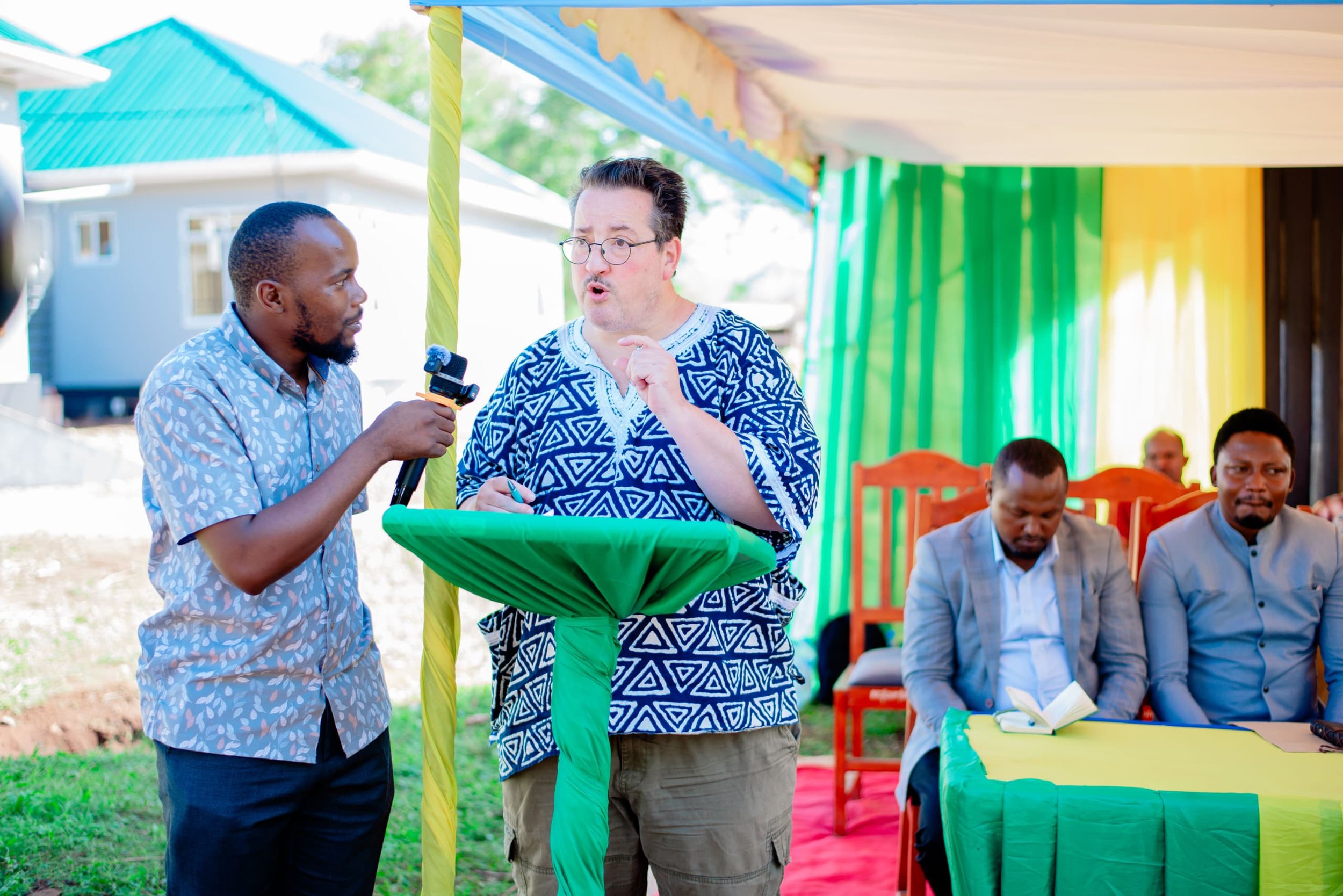
The official hand over of the teachers’ houses was attended by the Regional Commission, the local MP, the Chair of the Regional branch of CCM (ruling party), the representative form the District Commission, the Mayor or Babati, representatives from the Town Council, Ward Executive Officers, Village leaders, the School Development Committee, representatives from Tanesco and Bawasa, the Chair and Director of ILT and the Director and Programmes Manager of Mikuyu Tanzania, along with 300 community members, and tribal dancers.
Plans going forward:
The School Development Committee and the village leaders have requested, after consultation, if we can work together to:
demolish the 5 old and hazardous classrooms and replace them with 2 double classroom blocks with a teachers office in between, where the roofs are metal framed and each block has 20,000 of rain water harvesting, and are fully fitted.
renovate the poor classrooms and turn at least one of them into an early learning classrooms fitting out with suitable furniture and suitable teaching and learning materials.
improve the book/student ratio
The community have agreed to dig the foundations, provide the rocks and the bricks to head height. and to continue to provide.
We are working with the town council, the office of both the Mayor and the Regional Commissioner to see if they too are able to offer some financial or material support.